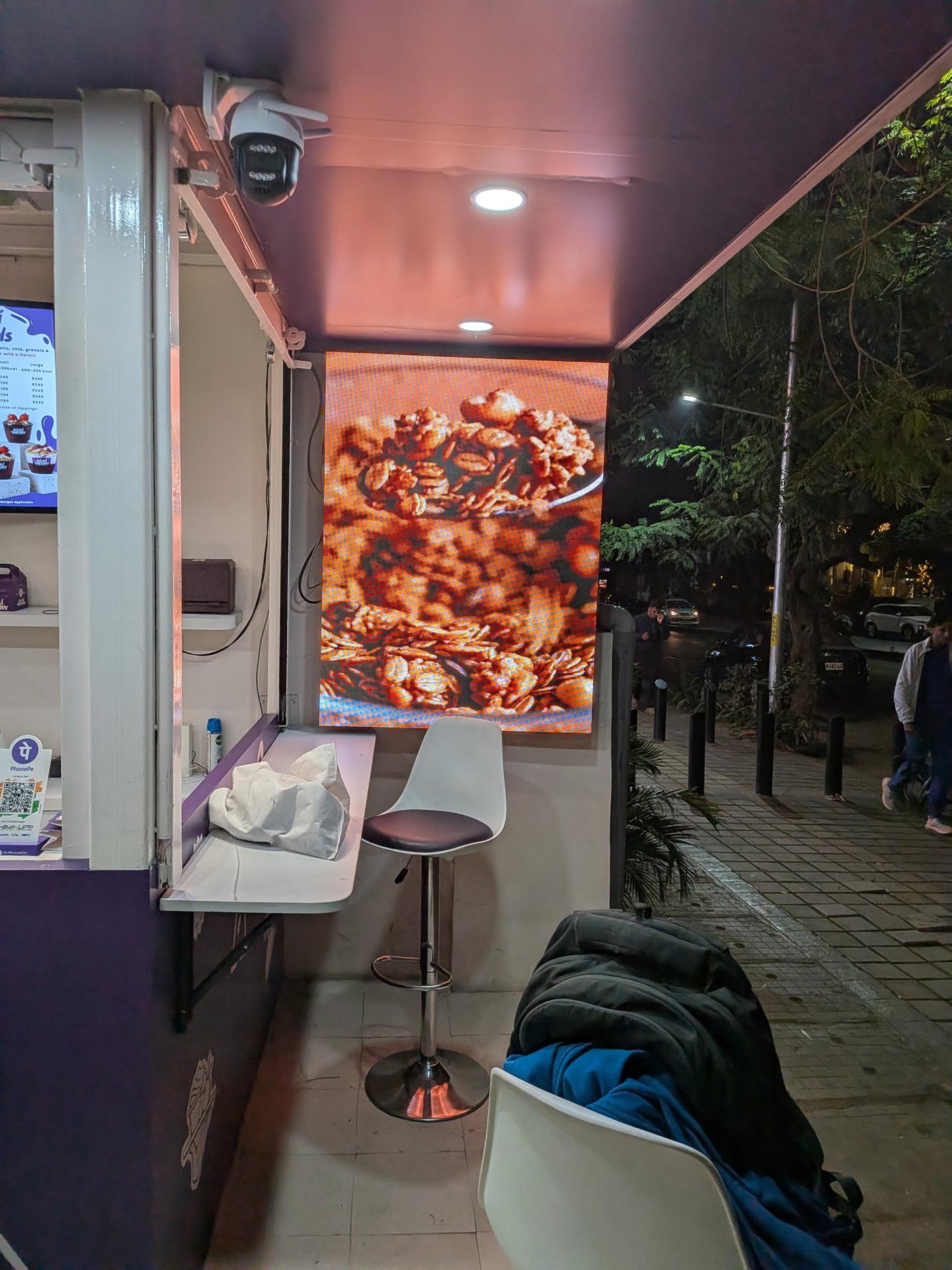
A salon sells a change people can see in the mirror. A screen in the right spot shows that change before the client sits down: a balayage reveal, a bridal look, a men's fade, a facial glow. We survey, supply, install and service LED screens for hair salons, beauty and nail studios, bridal makeup studios and day spas across Bengaluru and Karnataka. This page covers what is different about a salon: small rooms, many mirrors, soft lighting, steam and spray, and clients who sit very close.
A small room full of mirrors
Most salons are long, narrow units with mirrors down both sides. That shapes everything. A screen facing a mirror is seen twice, once directly and once reversed, so text on it reads backwards to half the room. Clients sit with their backs to the door and look forward into the mirror for forty minutes to two hours. And nearly every viewer is close: one to three metres. Placement comes first; pitch and size follow from it.
Spots that work in a salon or spa
- Behind the shopfront glass. The screen faces the street and sells walk-ins: offers, the stylist of the week, bridal season packages.
- The reception and waiting wall. Where clients wait for their stylist. Service menu, new treatments and product launches.
- Mirror-side strips. Narrow vertical screens between styling stations, placed so the client sees them in the mirror without reversed text. Calm loops only, no sound.
- Retail shelf. A small screen above the product shelf showing how the serum or the styling cream is used.
- Spa lounge. Slow nature visuals in the relaxation lounge. Treatment rooms stay screen-free; clients there want darkness.
What salons put on the screen
- A service menu with durations, grouped by hair, skin, nails and grooming.
- Before-and-after reels, shot in the salon, posted only with the client's written consent.
- Stylist and therapist introductions with their specialities.
- Bridal and festive packages ahead of the wedding season, Ugadi and Diwali.
- Vertical videos already made for Instagram, reused on a portrait screen without re-editing.
With PxlOS the manager schedules weekday-morning offers for the quiet hours and the bridal reel for weekends, from a phone, between appointments.
Close viewers need fine pixels
A screen at the reception counter is seen from about a metre; one on the far waiting-area wall from two or three. The rule of thumb, one metre of comfortable distance per millimetre of pitch, puts most salon screens at the fine end of the range. Our pixel pitch guide has the reasoning.
| Screen | Typical distance | Pitch |
|---|---|---|
| Reception counter or retail shelf | about 1 m | P1.2 or P1.5 |
| Mirror-side strip between stations | 1 to 1.5 m, via the mirror | P1.5 |
| Waiting-area wall | 2 to 3 m | P1.8 or P2.0 |
| Behind the shopfront glass | pavement, 2 to 5 m | outdoor-grade P2.5 or P3 |
Behind the shop glass is an outdoor job
A screen inside the window but facing the street fights direct daylight through the glass. An indoor panel, at up to 600 nits, looks dull there by mid-morning. We use an outdoor-grade panel, which can reach 4,500 nits, and a brightness schedule that brings it down to about 500 nits after dark so it does not glare at the pavement or into the mirrors inside. Because it sits behind glass, the outdoor cabinet's IP65 front and IP54 rear rating matters less than its brightness; it still copes well with the dust that settles on a shopfront. More on panel types on our outdoor LED page.
Spray, steam and soft light
- Hair spray and powder. They leave a film on any screen near the stations. Wipe with a dry microfibre cloth; no glass cleaner on the LED face.
- Steam and humidity. Indoor panels are IP43. Keep screens out of steam rooms, away from hair-wash basins and outside the spa wet area.
- Colour of the room. Salons light faces carefully to judge colour. A screen too bright or too blue changes how skin and hair colour look in the mirror, so we set colour temperature to match your lighting and run indoor screens well below their maximum.
- Heat. Dryers and straighteners already warm the room; give screens a ventilation gap and do not box them into the mirror frame.
Opening hours and running costs
Salons usually open around 10 and close between 8 and 10 at night, seven days a week. Schedule the screens to switch on with the lights and off at closing. A shopfront screen can run a little longer to catch evening footfall, at night brightness.
Independent salon, franchise or mall unit
An independent owner decides alone and can move fast. A franchise outlet usually needs the brand team to approve the screen size, placement and every piece of content, so ask them for their signage guidelines before the survey. Salons in malls need the mall's fit-out approval for anything visible from the corridor. In Bengaluru, salon streets include 100 Feet Road in Indiranagar, Koramangala, HSR Layout, Jayanagar 4th Block, Malleshwaram, Whitefield and Sahakara Nagar; we also work in Mysuru, Mangaluru and Hubballi. Retail neighbours on the same street will find ideas on our retail store page.
Mistakes we see in salons
- A screen opposite a mirror, so half the clients read every offer backwards.
- An indoor panel in the shop window that nobody outside can read at noon.
- Loud videos with sound near the styling chairs.
- Before-and-after photos used without the client's consent.
- A screen fixed above the wash basins, where it gets splashed every day.
Before you call us
- A floor sketch or photos showing the door, the mirrors and the reception.
- Where you want the screen and roughly how big.
- Whether the shop glass faces the sun.
- Franchise, mall or independent, and who approves signage.
- Who will update content: you, a manager or your social media person.
WhatsApp them to +91 72048 08334 or try the configurator. The exact price comes back on WhatsApp.
Want your shop window to sell the next appointment?
Send a photo of your salon front and reception, and we will suggest where a screen fits.
Send your salon photos →