Search for an LED wall factory in Bangalore and most of what comes back is a showroom, a trading office with a demo tile on the counter, or a sales desk for a plant in another state. The word factory is doing a lot of work in those listings. This page walks through what an LED wall factory in Bengaluru actually does, station by station, using PixelSpot's own line as the example, and then explains why the location of that line decides what happens when a module dies in year three.
PixelSpot has built LED video walls at its own facility in Bengaluru since 2022 and installs them with its own crew across Bengaluru, every Karnataka district, and Hosur and Krishnagiri just across the Tamil Nadu border. Nothing is subcontracted, nothing is drop-shipped from another city, and the engineer who answers a fault call in 2029 works for the company that built the wall.
What an LED wall factory does, and does not do
Nobody in Bengaluru grows LED chips. The diodes come from a handful of semiconductor fabs, and the surface-mount modules they sit on are produced on SMT lines in enormous volumes. An LED wall factory's work starts after that: selecting and matching those modules, fabricating the cabinets and the steel that hold them, wiring the electronics, ageing the finished panels under load, calibrating them into one surface, and keeping spares from the same lot for the life of the wall. That is the part an importer skips and a trader cannot do, and it is the part that decides whether your wall still reads as a single surface in 2031.
It also explains why "made in Bengaluru" is a statement about accountability rather than about where a diode was born. A cabinet that was assembled, aged and calibrated here has already been looked at, pixel by pixel, by the people who will install it and service it.
The PixelSpot line, station by station
1. Module sourcing and bin matching
At the diode fab, LEDs are sorted into bins by dominant wavelength and luminous intensity. Two modules from different bins can both say "P2.5, 600 nits" on the datasheet and still sit side by side as a warm tile next to a cool one. Every wall PixelSpot builds is populated from a single bin and a single production lot, and the 5% spare modules that ship with the wall come from that same lot. The lot number is written on the wall's build sheet, so a replacement pulled in 2029 comes from the right shelf and not the nearest box.
2. Cabinet and frame fabrication
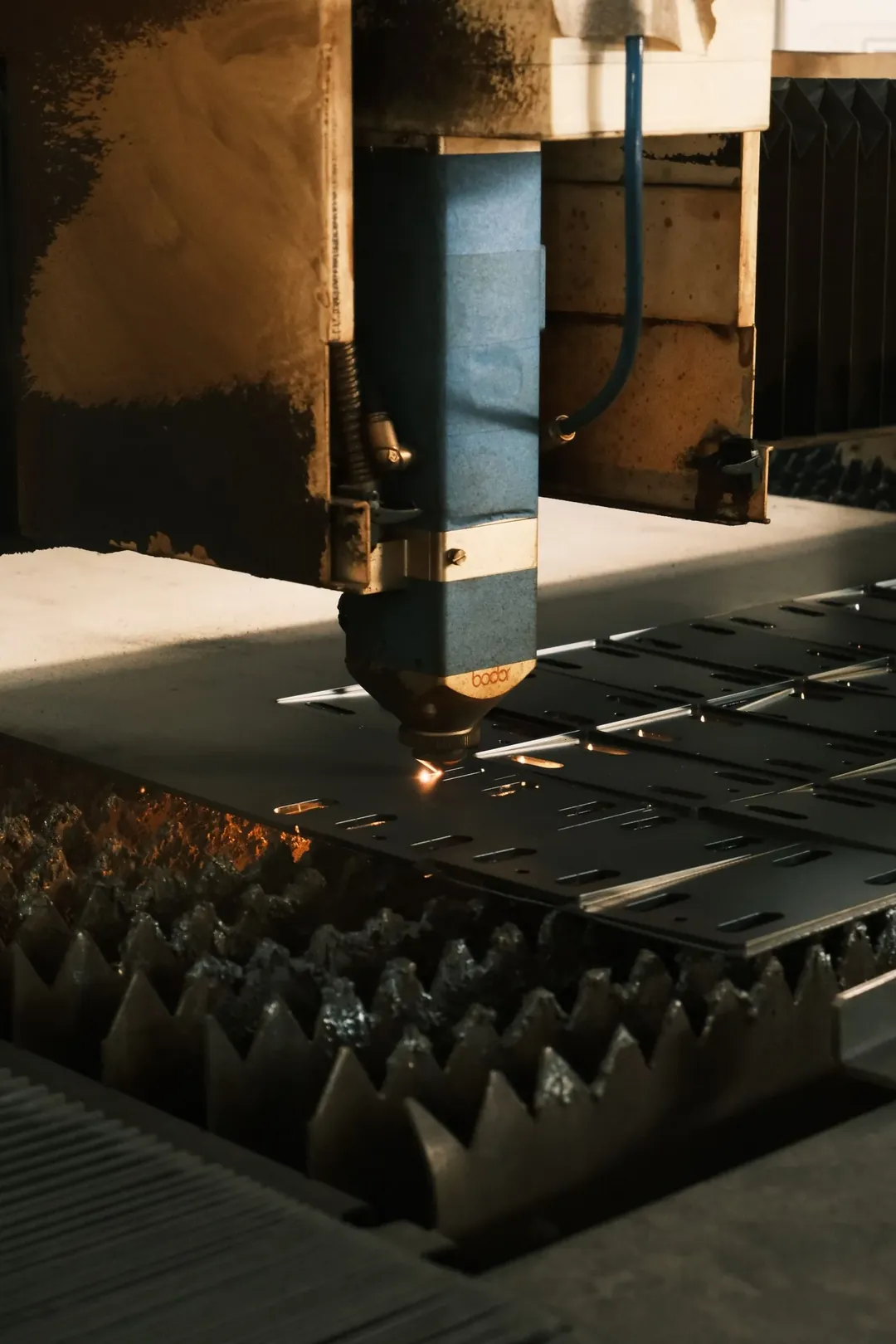
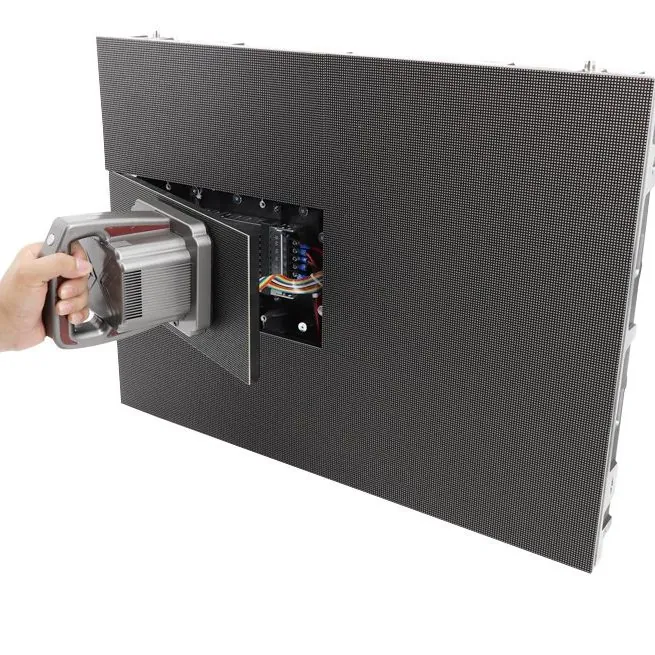
Indoor walls use 320 × 160 mm modules on die-cast aluminium cabinets, chosen because they hold flatness across a 12 ft width and keep the seams invisible. Outdoor and hoarding walls use IP65 cabinets with gasketed doors and drain paths. The mild-steel mounting frame is fabricated to the exact recess, pillar or shopfront opening measured at the free site survey: laser-cut, welded, checked square on a jig, then powder coated. Building the frame at the factory instead of on your floor is why a Bengaluru install usually takes a single working day.
3. Electronics assembly
Each cabinet is fitted with its power supplies, hub board, receiving card and ribbon cables, and the modules are seated on their magnets for front service. Receiving cards are NovaStar, Huidu, Linsn or Colorlight depending on the wall and the controller it will run with; every card is flashed and given its position in the wall map before the cabinet leaves the bench, so the wall comes up in the right order on site without a laptop session in front of the client.
4. Burn-in: 72 hours under load
Assembled cabinets go onto the aging rack and run for 72 hours at full white, then through red, green, blue and grey ramps. Infant failures show up here: a weak diode, a cold solder joint, a marginal power supply, a ribbon cable that was not fully home. They show up on our rack instead of on your wall in the first month. A cabinet that drops a pixel or a block during burn-in goes back to the bench, not into a crate.
5. Colour uniformity and calibration
After burn-in the whole order is assembled on the floor as one surface and photographed under a calibration camera. Brightness and chroma coefficients are written to each receiving card so every module hits the same white point at the same drive level. We check seams at the minimum viewing distance for that pitch, look for moiré against a phone camera, and sign off a dead-pixel count of zero. That is the pixel-to-pixel in the 2-year pixel-to-pixel onsite warranty: the factory has already inspected every pixel it is promising to stand behind.
6. The spares shelf
The 5% spare modules from the same lot, plus power supplies and receiving cards of the same model, are tagged with the project name and put on a shelf in Bengaluru. When a power supply fails in year four, the engineer takes the tagged part with him. Nothing is ordered, nothing clears customs, and no module from a different batch ever goes onto your wall. Repair pricing is published: a matched module fitted is ₹1,800 to ₹4,500, a power supply ₹2,500 to ₹4,000.
7. Dispatch
Cabinets are crated with foam, labelled by wall position, and travel with the wall map and the calibration file. Bengaluru sites are reached the same day; Mysuru, Tumakuru or Hosur the same day or the next; Hubballi, Mangaluru, Belagavi and Kalaburagi within a day or two. Frame fabrication and burn-in take most of the lead time; the site work itself is usually one to two days.
Bengaluru factory vs imported cabinets vs a plant in another state
Three kinds of "LED wall company" serve Bengaluru: a maker with its own factory in the city, a trader selling imported cabinets from a container lot, and a plant elsewhere in India with a sales office here. The differences are not in the brochure. They show up in year three.
| What you are comparing | PixelSpot, factory in Bengaluru | Imported cabinets sold by a trader | Plant in another state, sales office here |
|---|---|---|---|
| Replacement module in year three | Same-lot module from the shelf, fitted within 24 hours in Bengaluru | Waits for the importer's next container or air freight; weeks, and often a different batch | Couriered from the plant; days to a week, batch match depends on their records |
| Colour match of spares | Same bin and lot, recorded on the build sheet | Rarely; a visible patch is common | Usually, if the plant kept lot records |
| Invoice | Domestic GST invoice at 18%, input credit available to registered buyers | Trader's invoice with the import chain and its duty hidden inside the price | Interstate GST invoice; fine for input credit |
| Who installs | PixelSpot's own crew, on payroll | Riggers and an electrician hired per job | A local partner integrator |
| Who answers a fault | The engineers who built and installed the wall | The trader, who calls the importer | The sales office, which calls the plant |
| Where the warranty lives | Onsite, 2 years, pixel to pixel | On paper, with a factory overseas | With the plant, plus travel time |
None of this makes a trader dishonest. It makes him dependent on a supply chain he does not control, and it makes you dependent on him. Our supplier guide explains how to place any vendor in this table in ten minutes, and the HSN and GST page covers what the invoice should say.
Spec decisions the factory makes with you
A factory is only useful if it builds the right wall. These are the six decisions we settle at the site survey, before anything is cut.
| Decision | What we ask | Typical answer |
|---|---|---|
| Pixel pitch | Where does the nearest viewer stand? | P1.8 to P2.5 indoor for 2 to 5 m; P3 to P4 for a shopfront read from the pavement; P6 to P10 for a hoarding read from 20 m and beyond. See the pixel pitch guide. |
| Brightness | Does sunlight reach the screen? | 600 to 1,200 nits indoor; 5,000 to 7,000 nits outdoor, with auto-dimming so the wall is legible at 3 pm and comfortable at 10 pm |
| IP rating | Rain, dust, a kitchen nearby? | IP20 indoor; IP65 front and IP54 rear for outdoor and shopfront walls |
| Cabinet type | Is there access behind the wall? | Front-service die-cast aluminium for walls flush to a building or set into a shopfront; rear service only where there is 600 mm behind |
| Viewing distance | Where does the crowd actually gather? | Comfortable distance in metres is roughly the pitch in millimetres; a P2.5 wall is happiest from 2.5 m |
| Refresh and grey scale | Will the wall be filmed? | 3,840 Hz or 7,680 Hz refresh with 16-bit grey scale where phones and cameras will point at it |
When a factory-built wall is the right choice
- A permanent wall you will own for eight years or more. The batch-matched spares and the onsite warranty only pay off over time. For a two-day event, rent instead.
- A shape that is not a rectangle of stock cabinets. Portrait pillars, wide-format recesses and shopfront openings need a frame built to the millimetre, which a trader with container stock cannot offer.
- A GST-registered business that wants input credit on a clean domestic invoice rather than a price with hidden duty inside it.
- A control room or a small meeting room under 40 sq ft. Here an LCD video wall can still win on cost; our LED vs LCD comparison is honest about that.
What a factory-built wall costs
PixelSpot publishes its rates per square foot before GST: indoor P2.5 from ₹5,500, outdoor from ₹5,000, and fine pitch P1.2 to P1.8 higher, itemised on the price by pixel pitch page. The figure includes cabinets, modules, receiving cards, controller, power supplies, mounting frame, cabling, installation by our own crew, 5% same-lot spares, PixelOS content control from your phone and the 2-year onsite warranty.
| Wall | Area | From, before GST |
|---|---|---|
| 8 × 4 ft outdoor P4 shopfront | 32 sq ft | ₹1.6 lakh |
| 10 × 6 ft indoor P2.5 office or restaurant wall | 60 sq ft | ₹3.3 lakh |
| 12 × 8 ft indoor P2.5 auditorium or hall wall | 96 sq ft | ₹5.3 lakh |
The per sq ft rate is the same in every Karnataka district and in Hosur and Krishnagiri. Get an exact number from the LED wall price guide or the 60-second configurator, or WhatsApp the wall size and location to +91 72048 08334.
Installation and service reality across Karnataka
In Bengaluru the sequence is a free site survey and 3D mockup, fabrication and burn-in at the factory, then a single day on site for mounting, cabling, calibration and a handover session on PixelOS. Faults get an engineer within 24 hours, usually the same day for calls before noon, with the tagged spares in the van. Walls need a dedicated power line with a proper earth; the power consumption page gives the load per square foot so your electrician can size it.
Across the districts the wall is built and tested in Bengaluru and driven to site by the same crew, at the same rate. Service visits outside the city are scheduled within the week rather than within 24 hours, which is the one honest difference. Hosur and Krishnagiri sit 40 to 90 km from the factory and are treated like the Bengaluru outskirts. We do not take work beyond Karnataka and those two border towns, and we will say so on the first call rather than subcontract it.
Three walls that went down this line
- Acai Theory, Indiranagar: an outdoor P2.5 shopfront wall, IP65, front-serviceable because there is no rear access in a shopfront. The frame was fabricated to the shopfront opening at the factory and the install happened during closed hours, so the cafe never shut.
- Amukti store entrance, Bengaluru mall: a portrait fine-pitch display built into an entrance pillar. The frame was sized to the pillar before dispatch so no floor space was lost, and the display was commissioned before mall opening with content already loaded.
- Corporate office cafeteria: a wide-format indoor wall built to the exact recess. Panels were assembled and burn-in tested at the factory before delivery, then installed, calibrated and handed over in one working day.
Come and see it
The simplest way to check whether a company has a factory is to ask to visit it. Ask us on WhatsApp for a slot; you will see cabinets on the bench, a wall under burn-in and the spares shelf with other clients' project tags on it. If you have already ordered, you can see your own wall running on the floor before it is crated. Bring a phone camera and point it at the wall; that is the moiré test.
Two questions to ask any other vendor: which lot are my spare modules from, and who is on your payroll that will come when a block goes dark? A factory answers both from the build sheet. Our lifespan guide explains what fails and when over a wall's 8 to 12 years.
Need Help Choosing the Right LED Display?
Get a free consultation and instant quote from PixelSpot experts.
Get Free Quote →