Story
Açaí Theory, Indiranagar. Five lessons in café LED signage.
An outdoor P2.5 screen on an open café front in Indiranagar. What we built, why, and what any café or QSR in Bengaluru can take from it.
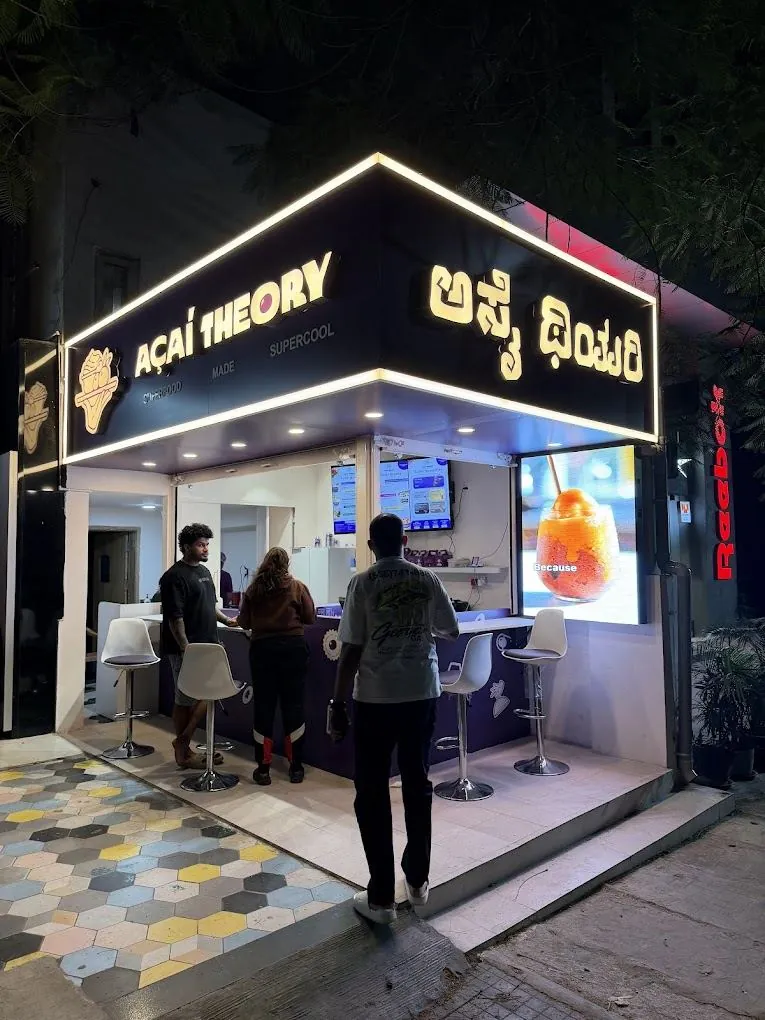
Açaí Theory's Indiranagar café opens straight onto the street. We built it an outdoor LED screen that reads in daylight, takes the rain, and changes its menu from a phone. The project itself is in the case study. This story is about what the job teaches any café or QSR owner in Bengaluru who is thinking about LED signage.
The short version
- What we built: an outdoor P2.5 storefront wall, IP65, with auto-dimming and front-service modules, run on PxlOS.
- Sunlight decides the panel. An open shopfront needs outdoor brightness, and auto-dimming for the evening.
- Rain decides the rating. Anything the monsoon can reach should be IP65, with sealed power.
- No space behind the screen? Buy front-service. Menu changes daily? Make sure a phone can change it.
- Install when you are closed. The Açaí Theory wall went up during closed hours.
What did PixelSpot build at Açaí Theory?
Every choice on this job came from the shopfront, not from a catalogue. Here is what went in, and why.
| Decision | What we chose | Why |
|---|---|---|
| Pixel pitch | Outdoor P2.5 | Sharp text for customers reading up close, at the counter and on the pavement |
| Weather rating | IP65 | The shopfront is open to rain and street dust |
| Brightness | High, with auto-dimming | Readable by day, comfortable after dark |
| Service access | Front-service modules | A shopfront has no rear access |
| Content | PxlOS | Menu and offers changed from a phone |
| Installation | During closed hours | The café kept its normal trading hours |
Got our LED wall from them at our Indiranagar store. Super product and super professionalism which is honestly very rare to find.
Açaí Theory, Google review
Those six decisions are the whole playbook. Here is how each one applies to your café.
Lesson one: will your screen win against Bengaluru sunlight?
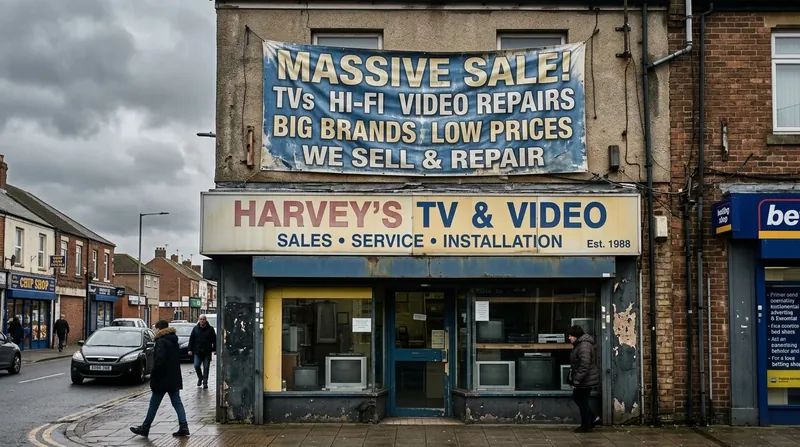
An open café front takes whatever light the street gives it. A TV on the counter is fine for a menu read at arm's length indoors. Pointed at the street, it disappears. What you need depends on where the screen sits. That is the same seeing problem every high-street shop has; our piece on why shoppers walk past a storefront explains it.
| Where the screen sits | Brightness needed | What that means |
|---|---|---|
| Inside the café, away from windows | Up to 600 nits | An indoor wall, dimmed for comfort |
| Behind glass, facing the street | More than an indoor panel gives | An outdoor-grade panel, up to 4,500 nits, not a standard indoor one |
| Open front, shaded by an awning | Up to 4,500 nits | Outdoor panel, IP65, auto-dimming |
| Open front in direct sun | Up to 4,500 nits | Outdoor panel, IP65; the survey checks the sun angle and shading |
Brightness has a second half: the night. An outdoor screen running above about 500 nits after dark is glare, and it makes food look harsh. Auto-dimming lets one screen serve the lunch crowd and the late-evening crowd. Our brightness guide goes deeper.
Lesson two: can the screen take the monsoon?
Bengaluru gets two rainy seasons, the southwest monsoon from June and the northeast monsoon in October and November. Rain on an open counter rarely falls straight down. IP65 means the panel is dust-tight and protected against jets of water, which is the level any screen exposed to weather should have.
The screen is only half of it. Power needs an earthed, IP65 distribution box close to the wall, and a stabiliser if your supply swings, because power supplies are the part that suffers most from voltage sags. Our guide to monsoon, power and GST for outdoor walls covers the details.
Lesson three: can it be serviced from the front?
A café screen usually sits against a wall, a pillar or a shutter box, with no room behind. A rear-service screen there becomes a problem the first time a module needs attention. Front-service modules come off from the front, so a repair is a short visit, not a dismantling job. Our front-service vs rear-service guide explains how your building decides.
Every PixelSpot wall ships with 5% spare modules from the same production batch and a 2-year pixel-to-pixel onsite warranty. In Bengaluru, we respond within 24 hours.
Café storefronts
Bright at 3 pm. Gentle at 10 pm.
Auto-dimming lets one screen serve the lunch rush and the late crowd, without glare.
Lesson four: who changes the menu, and from where?
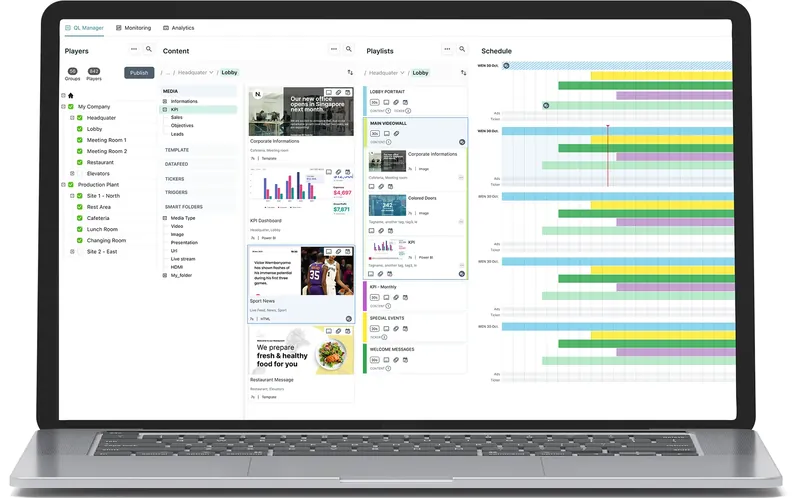
Cafés change their signage more often than shops do. Prices move, an item sells out, a seasonal special arrives, the weekend combo starts on Friday. At Açaí Theory, the menu and offers are changed from a phone on PxlOS. The person who knows the special is sold out can take it off the screen in the same minute.
A few rules we give every café:
- Fewer items, bigger prices. A screen is not a printed menu card. Show the six things you most want to sell.
- One hero photo per slide. A single drink or bowl, shot well, beats a collage.
- Schedule by daypart. Breakfast, afternoon and evening menus switch automatically.
- Think bilingual. Açaí Theory's own name board carries Kannada and English. Your screen can do the same.
Our content playbook for retail LED displays has text sizes, loop lengths and a festive calendar.
Lesson five: install without closing
For a café, a lost trading day is real money. The Açaí Theory wall went in during closed hours. Any café can plan for the same.
- Survey and 3D mockup. We measure the frontage and show you the screen in your space, free in Bengaluru, before you pay.
- Build and test off-site. The wall is assembled and burn-in tested at our Bengaluru facility.
- Prepare two things. A power point and a network cable at the screen position.
- Install after closing. Our crew fixes the frame, fits the modules and commissions the wall while the shutters are down.
- Hand over. PxlOS goes on your phone, and your first menu is live before you open.
What would a screen like this cost your café?
Outdoor P2.5 is ₹10,250 per sq ft + GST, installed, with the controller extra. For reference, a 10 × 6 ft outdoor P2.5 wall is ₹7,09,000 + GST including the controller. Most café fronts need a smaller screen than that, so size it to your opening.
If customers mostly read the screen from across the road rather than at the counter, outdoor P4 at ₹5,100 per sq ft + GST can do the job for less. For a menu wall inside the café, away from the sun, indoor P2.5 is ₹5,450 per sq ft + GST. Our LED walls for restaurants and cafés page compares the options. If you are still deciding between a printed menu board, a TV and an LED screen, start with our guide to digital signage in Bengaluru: print, TV or LED.
A checklist for your café or QSR storefront
- Visit your frontage at 3 pm and 9 pm, and note where the light falls.
- Measure the opening, and where customers stand to read.
- Ask for IP65, auto-dimming and front-service in writing.
- Mark the power point and the network cable before installation day.
- Decide who on your team owns the menu on PxlOS.
- Book the installation for closed hours.
Where to go next
A café screen earns its place in the first hour of the day and the last. Get the brightness, the rating and the menu workflow right, and it simply works. Put your frontage size into the LED wall configurator to see what yours would cost.
Questions? Answers.
Why P2.5 for a café storefront?
Can an outdoor LED screen stay on in heavy Bengaluru rain?
Can my staff change prices on the screen themselves?
Will installing an LED screen mean closing my café for a day?
What happens if part of the screen fails?
See it running. Then decide.
Send your wall size on WhatsApp for a same-day price, or see indoor and outdoor walls running at our Jalahalli East experience centre in Bengaluru.
Prices are estimates: installed, controller extra, plus 18% GST. See every price