Industry guide
Invisible from the street? A storefront LED screen changes that.
Shoppers don't ignore your store on purpose. They never see it. Why printed boards fail on a busy Bengaluru street, and what a storefront LED screen changes.
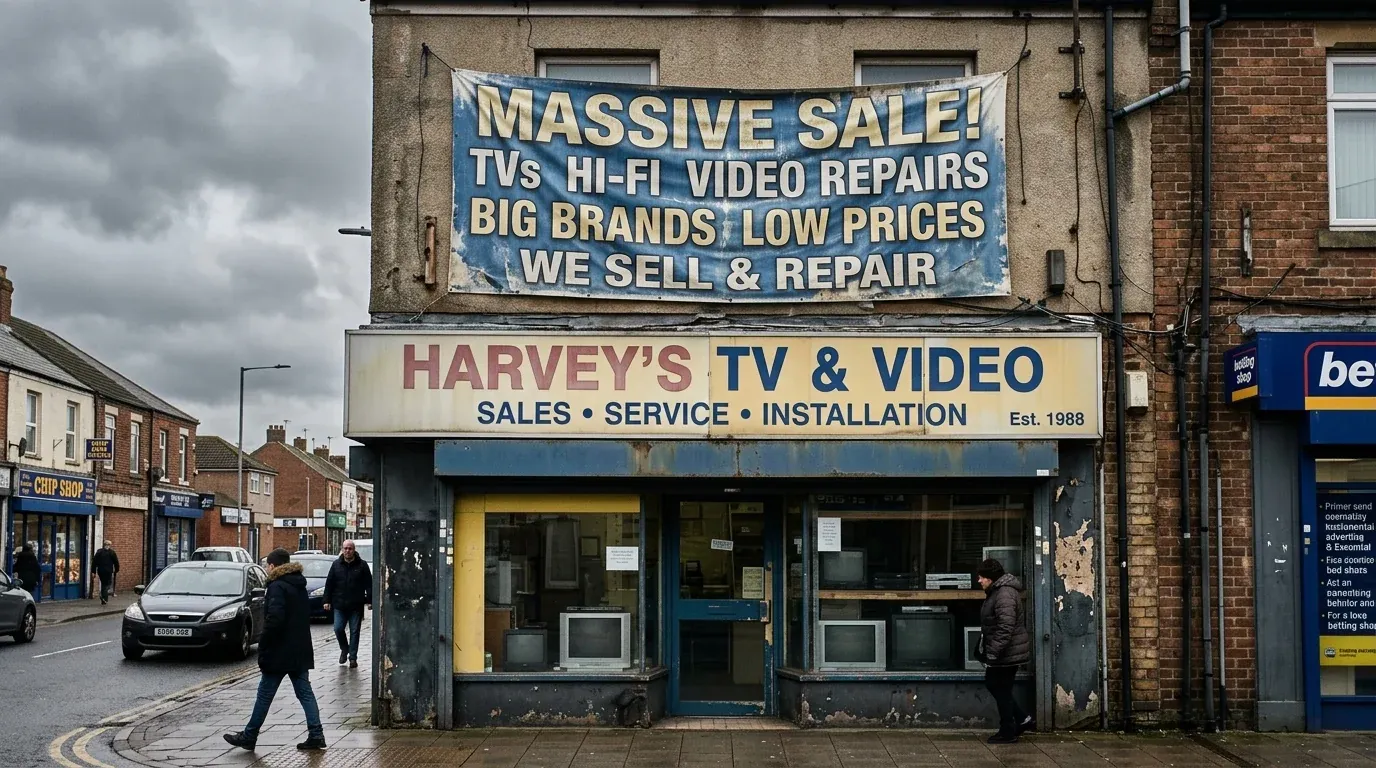
Most shops that struggle for walk-ins don't have a product problem. They have a seeing problem. A shopper on a Bengaluru street gives your frontage a second or two, in glare, next to every other sign on the road, and a printed board loses that contest before it starts.
The short version
- A printed board is only as bright as the light that falls on it. At 3 pm it disappears into glare. At 9 pm it depends on a tube light.
- People on a busy road read a shopfront in a glance. One short message wins. A list of ten offers loses.
- A storefront LED screen makes its own light, moves, and changes from a phone. That is the whole difference.
- Match brightness to the spot: behind a street-facing window or on an open front, an outdoor-grade panel of up to 4,500 nits. A TV or an ordinary indoor wall in the window will wash out.
- Inside the store, facing the door, a 6 × 4 ft indoor P2.5 wall is ₹1,64,000 + GST with the controller. Anything that faces the street needs an outdoor-grade panel.
Why can't people see your shop from the street?
Walk past your own store at the busiest hour and try to read it the way a stranger does. Three things work against you, and none of them is your fault.
Glare beats print
Flex, vinyl and backlit lightboxes don't make light. They bounce it. When the afternoon sun hits a glass shopfront, the glass turns into a mirror and the passer-by sees the street reflected back, not your window. After dark, a lightbox is only as good as the tubes inside it, and the print fades with every season of sun and rain.
Nobody on a main road is browsing
People on Commercial Street or a Jayanagar main road are walking somewhere else. They are dodging two-wheelers, checking their phone, holding a child's hand. Your frontage gets a glance, not a read. A board with the shop name, eight categories, two phone numbers and an offer asks for time nobody gives.
Your frontage is fighting its neighbours
Every shop on the stretch has a sign. Many use the same red and yellow, the same "sale" and the same font. After a week, a static board becomes wallpaper. Even your regular passers-by stop noticing it, because nothing on it ever changes.
What does a storefront LED screen actually change?
A screen doesn't make a shop better. It makes a shop visible. Four things change the day it goes live.
- It makes its own light. A correctly specified panel is readable at noon and, with auto-dimming, comfortable at 10 pm. Glare stops being your problem.
- It moves. Our eyes are built to notice movement at the edge of vision. A slow product shot or a changing price catches the eye of someone who was not looking for you.
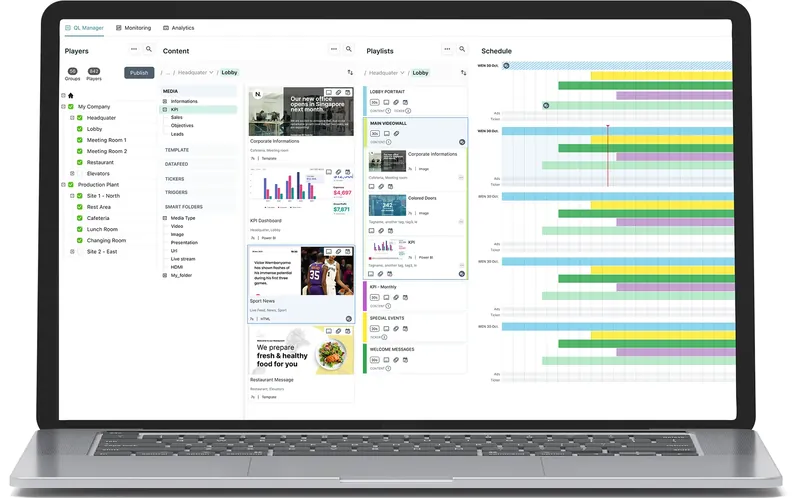
- It changes. Breakfast in the morning, an evening combo at 6 pm, a weekend offer on Friday. With PxlOS you change it from a phone, and schedule it by time of day.
- It stays current. No reprint, no ladder, no "Diwali offer" still hanging in December.
What it will not do: fix the wrong product, the wrong price or slow service. It gets you seen. The shop still has to do the rest. How a screen makes its own light, and why motion catches the eye, is in LED display technology, explained.
Which storefront screen fits your shop?
Where the screen sits decides almost everything: brightness, weather rating and pixel pitch. A useful rule for pitch: the closest comfortable viewing distance in metres is roughly the pitch in millimetres, so P2.5 looks sharp from about 2.5 m and P4 from about 4 m.
| Where it goes | What it must handle | What to buy | Price per sq ft |
|---|---|---|---|
| Inside, facing the door | Shop lighting, people 2 to 5 m away | Indoor P2.5 | ₹5,450 + GST |
| Mall corridor or entrance pillar | Controlled light, people walking close | Indoor P1.8 to P2.5, often portrait | ₹5,450 to ₹7,400 + GST |
| Behind the shop window | Daylight through glass | Outdoor-grade panel, up to 4,500 nits | Quoted after survey |
| Open shopfront or facade | Direct sun and rain | Outdoor P2.5 to P4, IP65 | ₹5,100 to ₹10,250 + GST |
Installed prices, controller extra, excluding GST. Updated 29 September 2026. Whole-wall prices on the LED wall price guide include the controller.
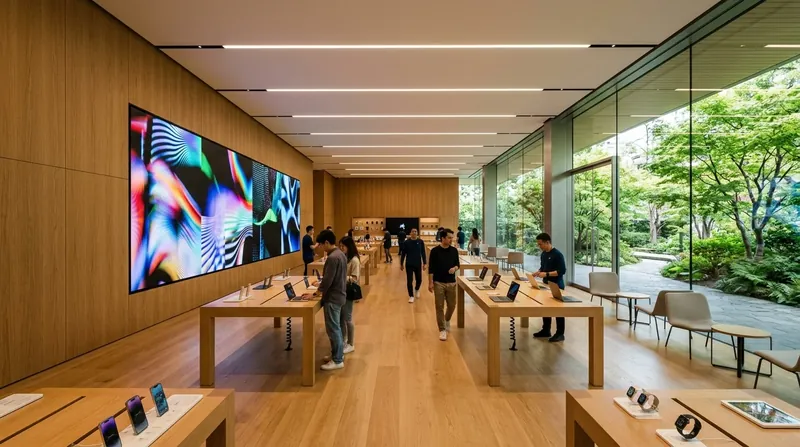
For most high-street shops, outdoor P2.5 suits a screen people read from the pavement, and P4 suits one they read from across the road. For in-store walls and mall frontages, see our LED walls for retail stores page. If you are still weighing print, a TV, a standee or an LED wall for each spot, digital signage in Bengaluru: print, TV or LED compares them side by side.
Storefront
Seen at noon. Seen at 10 pm.
A screen that makes its own light, and dims itself after dark, does the one job a printed board can't.
What should you never put in a shop window?
We see the same mistakes on Bengaluru high streets every month. Each one costs money and still leaves the shop invisible.
- A home TV facing the street. It is built for a living room. Behind glass in daylight it becomes a dark rectangle with your reflection in it.
- A standard indoor LED wall behind glass. An indoor panel, even at its full 600 nits, washes out in daylight behind a window. You need an outdoor-grade panel, up to 4,500 nits. Our guide to LED wall brightness explains why.
- Full brightness at night. An outdoor screen above about 500 nits after dark is glare. Neighbours complain, and it looks cheap. Insist on auto-dimming.
- Too fine a pitch for the distance. If people read your screen from 8 m across the road, P1.8 spends money on detail nobody can see.
- No content plan. A screen that plays the same logo for a year is just a brighter printed board.
What did real Bengaluru storefronts do?
Two PixelSpot installs show the two ends of the storefront problem.
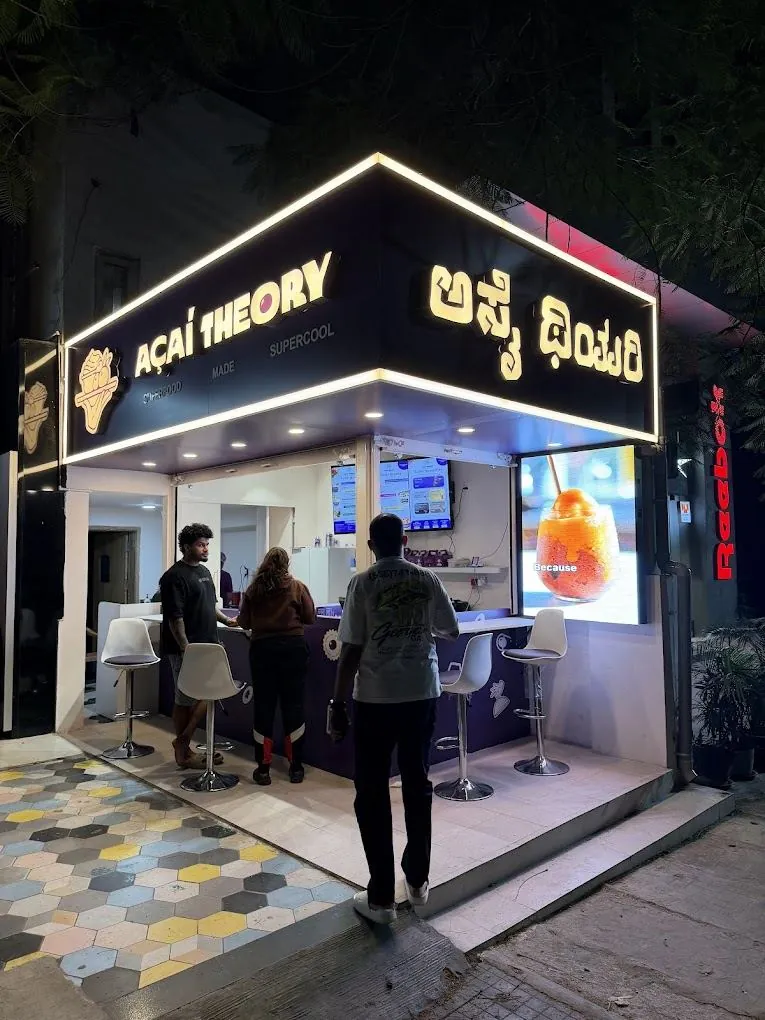
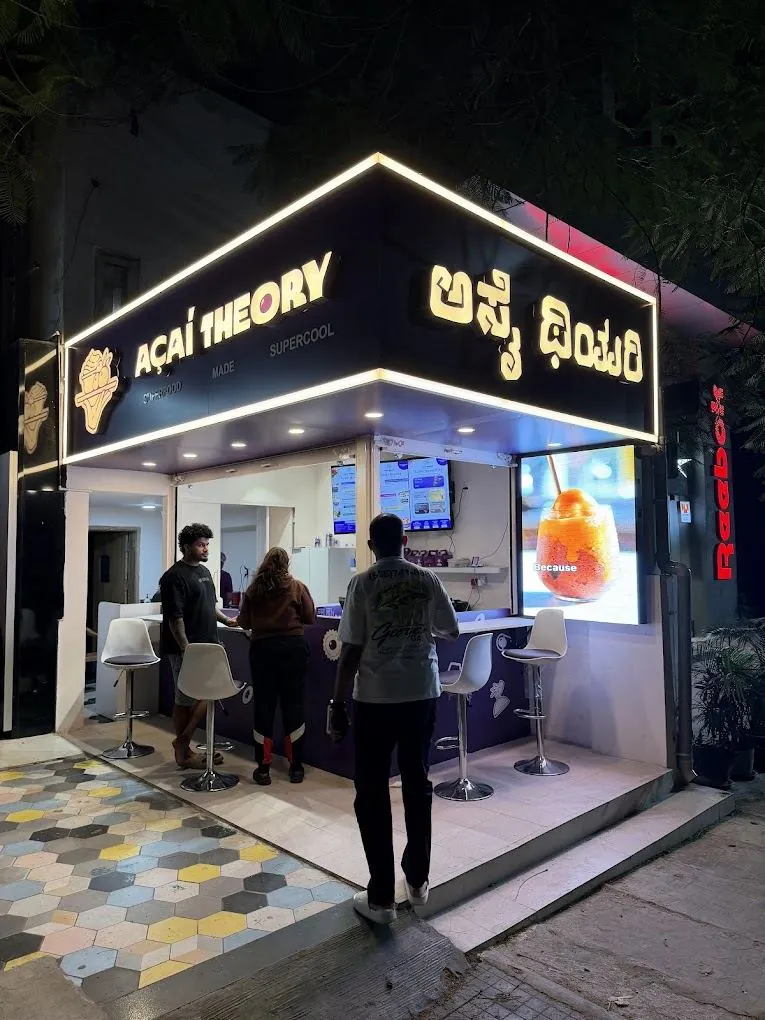
Açaí Theory, Indiranagar. An open shopfront on the street. We fitted an outdoor P2.5 wall rated IP65, with auto-dimming, and front-service modules because a shopfront has no rear access. The team changes the menu and offers from a phone on PxlOS, and the wall was installed during closed hours. The full story is in the Açaí Theory case study. The lessons any café can take from it are in five lessons in café LED signage.
Amukti, in a Bengaluru mall. An ethnic-wear store where a printed lightbox sat in the entrance pillar. We replaced it with a portrait fine-pitch indoor LED display built into the pillar, and PxlOS now schedules collection videos. Read the Amukti case study.
Pixelspot delivered more than just an LED video wall, they brought our storefront to life. Their digital signage options are worth every penny.
Anita Zalte, Google review (Amukti)
How do you plan a storefront screen?
- Stand where your customers stand. Measure from the pavement, the road or the mall corridor to your frontage. That distance picks the pitch.
- Look at the light twice. Visit at 3 pm and at 8 pm. Sun on the glass means an outdoor-grade panel behind it; an open front means outdoor-grade and IP65.
- Size it to the opening. Fit the screen to the frontage, not to the most your budget allows. The LED wall size calculator helps.
- Get a survey and a 3D mockup. PixelSpot does both free in Bengaluru, before you pay, so you see the screen in your shopfront first.
- Write the first month of content. Decide what plays in the morning, the evening and the weekend. Our retail LED content playbook shows how.
Where to go next
Your shop already has something worth walking into. The street just needs a reason to look. Start by measuring your frontage and checking the light at 3 pm, then put those numbers into the LED wall configurator.
Questions? Answers.
How much does a storefront LED screen cost in Bengaluru?
Can I put a normal TV in my shop window instead?
Will a bright LED screen disturb my neighbours at night?
How long does it take to get a storefront screen installed?
See it running. Then decide.
Send your wall size on WhatsApp for a same-day price, or see indoor and outdoor walls running at our Jalahalli East experience centre in Bengaluru.
Prices are estimates: installed, controller extra, plus 18% GST. See every price