Buying guide
Indoor vs outdoor LED wall. The sun decides which one you need.
Brightness, weatherproofing, pitch, power and price, compared. And the costly mistake of putting an indoor wall behind street-facing glass.
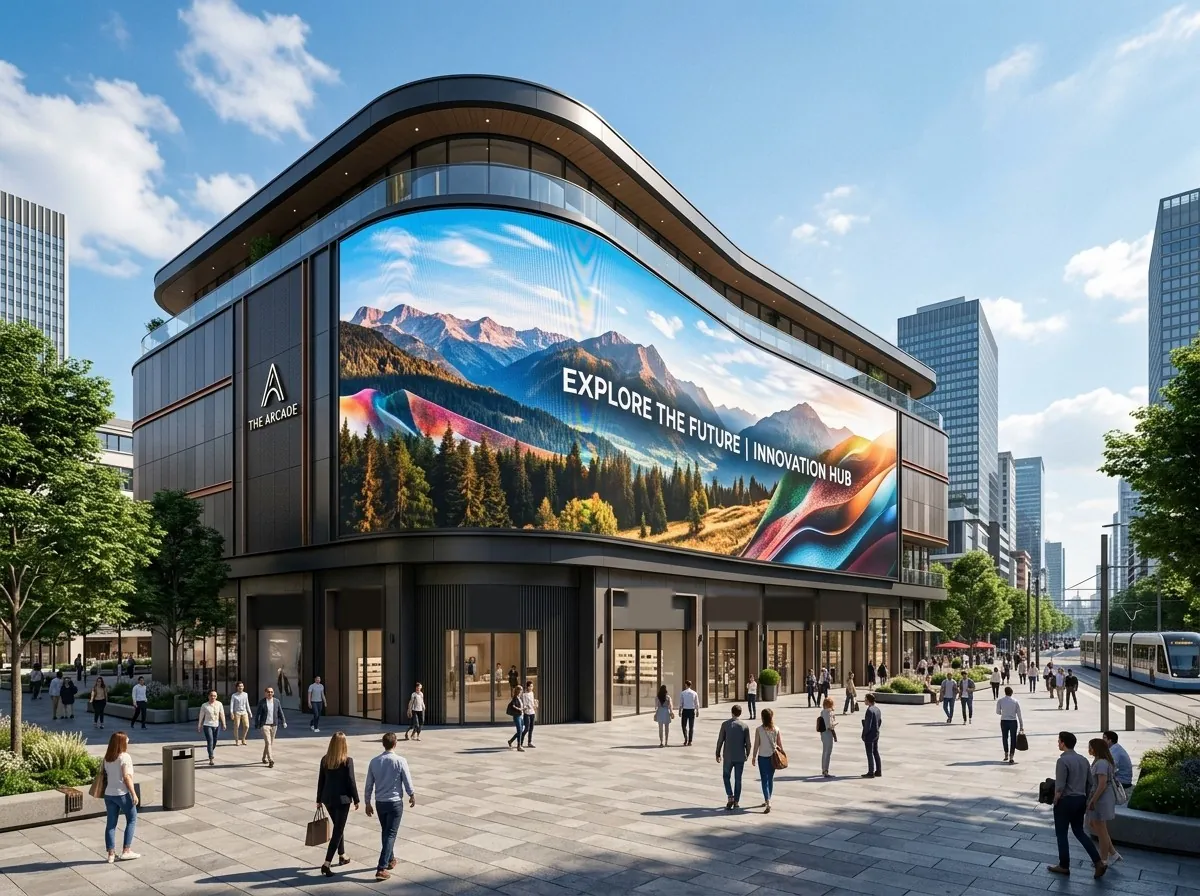
An indoor and an outdoor LED wall can look the same in a brochure. On site they are different machines. One is built for a lobby at 25 degrees. The other is built for a west-facing shopfront at 3 pm in April and a monsoon evening in July. Decide where the wall will live, and most of the other decisions make themselves.
The short version
- Our indoor walls reach up to 600 nits, dimmed for comfort. Our outdoor walls reach up to 4,500 nits for Bengaluru daylight, and must dim hard after dark.
- Outdoor cabinets are steel, IP65 at the front and IP54 at the rear. Indoor cabinets are only IP43 and should never see rain.
- Indoor P2.5 is ₹5,450 per sq ft + GST. Outdoor P4 is ₹5,100 per sq ft + GST. Both installed, controller extra.
- An indoor wall behind street-facing glass is the classic trap. That spot needs an outdoor-grade panel, up to 4,500 nits.
- Covered but open to the air? Porches, canopies and open corridors get an outdoor wall.
What actually separates an indoor LED wall from an outdoor one?
Five linked things: brightness, sealing, cabinet build, pixel pitch and power. An outdoor wall has to beat the sun, so it is brighter and draws more power. It lives in the rain, so it is sealed and built from steel. It is read from the road, so its pixels can sit further apart. Each of those choices is wrong for a lobby.
| Indoor wall | Outdoor wall | |
|---|---|---|
| Brightness | Up to 600 nits, dimmed for comfort | Up to 4,500 nits, dimmed at night |
| Sealing | IP43; open to shed heat | IP65 at the front, IP54 at the rear |
| Cabinet | Die-cast aluminium, front service | Mild steel, front or rear service |
| Usual pitches | P1.2 to P2.5 | P2.5 to P10 |
| Average power | 14 to 23 W per sq ft | 23 to 33 W per sq ft |
| Typical places | Lobbies, showrooms, boardrooms, halls | Shopfronts, facades, gates, hoardings |
Power is the average on normal video, measured on PixelSpot walls. Peaks are two to three times higher.
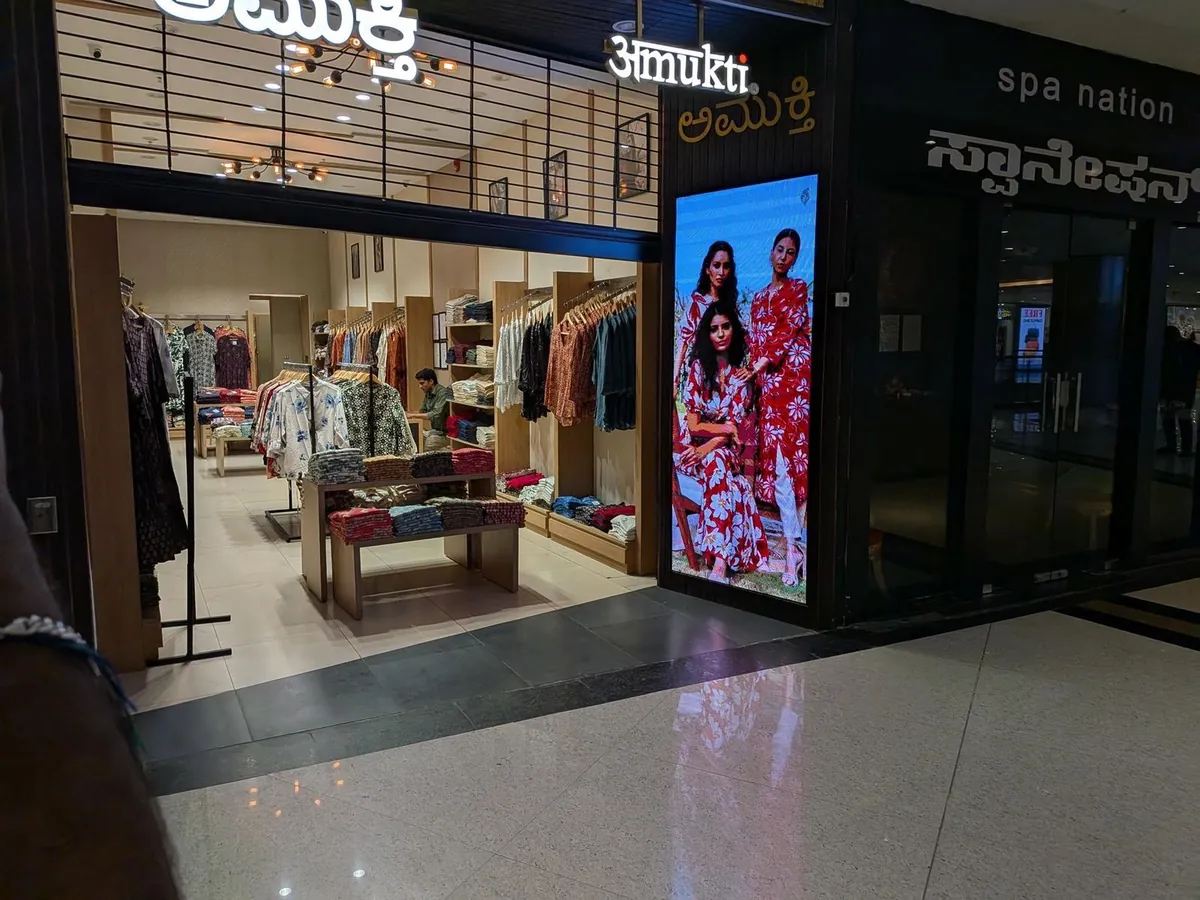
How bright does the wall need to be?
Brightness is measured in nits. The number you need depends on the light the wall has to beat, not on how impressive you want it to look.
| Where the wall sits | What it needs |
|---|---|
| Boardroom or auditorium, controlled light | Indoor, up to 600 nits, run well below full |
| Bright lobby or showroom with a glass front | Indoor, up to 600 nits, dimmed in the evening |
| Indoors, behind a window facing the street | Outdoor-grade, up to 4,500 nits |
| Outdoors, shaded or north-facing | Outdoor, up to 4,500 nits, dimmed after dark |
| Outdoors, direct sun, west-facing | Outdoor, up to 4,500 nits; the survey checks angle and shading |
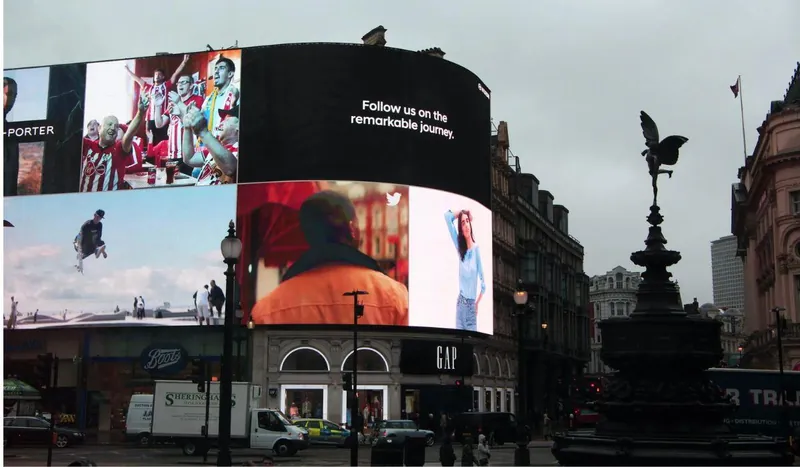
More is not better. An outdoor panel inside a showroom is glare, and you pay in power for brightness you will dim away. Outdoors, the rule flips at sunset: above about 500 nits after dark, a wall stops being a sign and starts annoying the flats across the road. The full numbers are in our brightness guide, and the reasoning behind them in LED wall brightness, explained.
What does IP65 mean, and why don't indoor walls have it?
IP65 is a sealing rating. The 6 means dust cannot get in. The 5 means water jets from any direction cannot either. On an outdoor cabinet that rating belongs to the face, where the weather hits: PixelSpot outdoor cabinets are IP65 at the front and IP54 at the rear, which is protected against dust and splashing water. That takes gaskets around the modules and doors, and a path for water to drain. PixelSpot builds outdoor walls on mild-steel cabinets, never die-cast aluminium, with the frame designed for wind as well as weight.
Indoor cabinets are left open on purpose, to shed heat into the room, and they are lighter: roughly 3 to 4 kg per sq ft including the frame, against 5 to 6 kg for outdoor steel. That openness is also why an indoor wall does not survive a Bengaluru monsoon, even under a roof. Our cabinet guide shows the three frame types side by side.
How far away will people stand?
Pixel pitch is the gap between pixels, in millimetres. A simple rule: the closest comfortable viewing distance in metres is about the pitch in millimetres. P2.5 looks sharp from about 2.5 m. P6 from about 6 m.
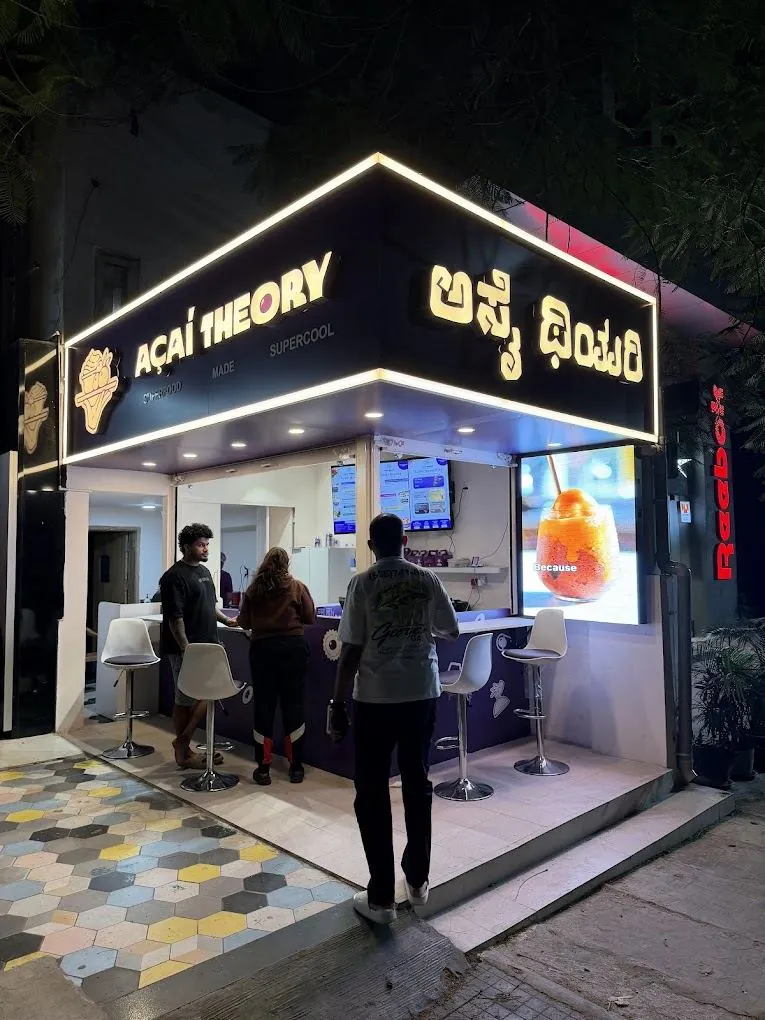
Indoors, people come close, at a counter, a reception desk or a boardroom table, so indoor walls live between P1.2 and P2.5. Outdoors, most people read from the pavement or the road, so P3 to P6 is typical, and hoardings read from 20 m and beyond go coarser still. There are exceptions. At Açaí Theory in Indiranagar, passers-by read the menu from 3 to 5 m, so the shopfront got outdoor P2.5: fine enough for a menu, bright and sealed enough for the street. The pixel pitch guide goes further.
Indoor vs outdoor LED wall price per sq ft
At the same pitch, outdoor costs far more, because the brightness, sealing and steel are real hardware. But outdoor walls usually use a coarser pitch, and coarse pitch costs less. So the two walls Bengaluru buys most, indoor P2.5 and outdoor P4, cost almost the same per sq ft.
| Wall | Price per sq ft | Typical place |
|---|---|---|
| Indoor P1.8 | ₹7,400 + GST | Boardrooms, viewers under 2 m |
| Indoor P2.5 | ₹5,450 + GST | Shops, lobbies, restaurants |
| Outdoor P2.5 | ₹10,250 + GST | Shopfronts read up close |
| Outdoor P3 | ₹7,150 + GST | Shopfronts read from the pavement |
| Outdoor P4 | ₹5,100 + GST | Shopfronts, gates, building fronts |
| Outdoor P5 | ₹4,950 + GST | Facades read from the road |
Installed, controller extra. P8 and P10 are priced on request. Updated 29 September 2026.
For whole walls with the controller included, a 10 × 6 ft indoor P2.5 wall is ₹3,94,000 + GST, and a 10 × 6 ft outdoor P4 wall is ₹3,56,500 + GST. Same size, nearly the same money, very different machines. Every size and pitch is on the LED wall price guide.
Outdoor
Loud at noon. Quiet by ten.
Every PixelSpot outdoor wall dims itself with the daylight through PxlOS, so the brightness you pay for in April never turns into glare at night.
The trap: an indoor wall behind a street-facing window
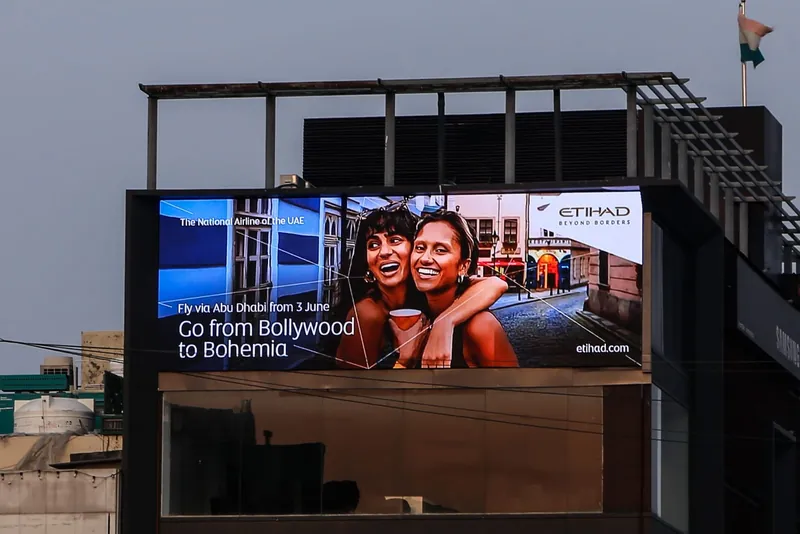
The wall is inside the shop, so it gets an indoor panel of up to 600 nits. Then the afternoon sun lands on the glass, the street reflects in it, and the screen turns into a pale grey rectangle exactly when the pavement is busiest.
A wall facing the street through glass is competing with daylight. It needs an outdoor-grade panel, up to 4,500 nits, run below full and dimmed in the evening, and air between window and wall, because glass traps heat. At the same pitch that costs more than an indoor panel, as the price table above shows. It is still far less than replacing a wall nobody can read. Why a printed board or a TV loses the same contest is in our storefront LED screen guide.
Semi-outdoor spaces: porches, canopies and open corridors
Plenty of Bengaluru walls live in between: a shopfront under a deep canopy, a temple mandapa open on three sides, a petrol-pump forecourt, a college corridor open to the campus. None sees direct rain every day. All of them see humidity, dust and the sideways rain of a July evening.
Treat every one of them as outdoor. An indoor cabinet has no gaskets, so damp air and blown rain reach the electronics, and our warranty, reasonably, excludes water damage to an indoor wall used outside. What changes in a shaded porch is brightness: the lower end of the outdoor range may be enough, and PxlOS will hold it there. A fully enclosed atrium under skylights is indoor, but bright: up to 600 nits works while the sun stays off the screen’s face, and if it lands there, plan for an outdoor-grade panel.
Power: outdoor walls draw more
Brightness costs electricity: outdoor walls average 23 to 33 W per sq ft on normal content against 14 to 23 W indoors, and the wiring must be sized for a full-white peak two to three times higher. Outdoor walls also need an earthed IP65 distribution box within 3 m of the wall, and larger ones go on a three-phase supply. The power consumption guide has the monthly units by wall size, and this outdoor guide covers monsoon-proofing in more depth.
Five questions that decide it
- Does rain ever reach the spot? Even blown rain, even a few days a year. If yes, outdoor.
- Does sunlight reach the screen? Directly or through glass. That sets the nits.
- Where does the nearest person stand? That distance in metres is roughly your pitch in millimetres.
- Which way does it face? A west-facing wall takes the harsh afternoon sun, so the survey checks its angle and shading.
- Where is the power? A dedicated line with a proper earth, close to the wall.
If two answers point different ways, book a site survey. It is free in Bengaluru and comes with a 3D mockup of the wall in your space before you pay anything. What that visit measures, in the order we measure it, is in the outdoor LED wall site survey.
Where to go next
The wall that disappoints is rarely a bad wall. It is a good wall in the wrong place. Match it to the place first. If your space is indoors and you are still weighing options, read LED wall, projector or LCD next.
Questions? Answers.
Can I put an indoor LED wall under a canopy or in a porch?
Can an outdoor LED wall be used indoors?
How much more does an outdoor LED wall cost than an indoor one?
How long does an outdoor LED wall last in Bengaluru weather?
See it running. Then decide.
Send your wall size on WhatsApp for a same-day price, or see indoor and outdoor walls running at our Jalahalli East experience centre in Bengaluru.
Prices are estimates: installed, controller extra, plus 18% GST. See every price