Buying guide
College and school auditorium LED video walls. Sized from the last row.
Annual day, convocation, placement talks and Monday assembly all run through one screen. Here is how to size, specify and budget a wall that works with the hall lights on.
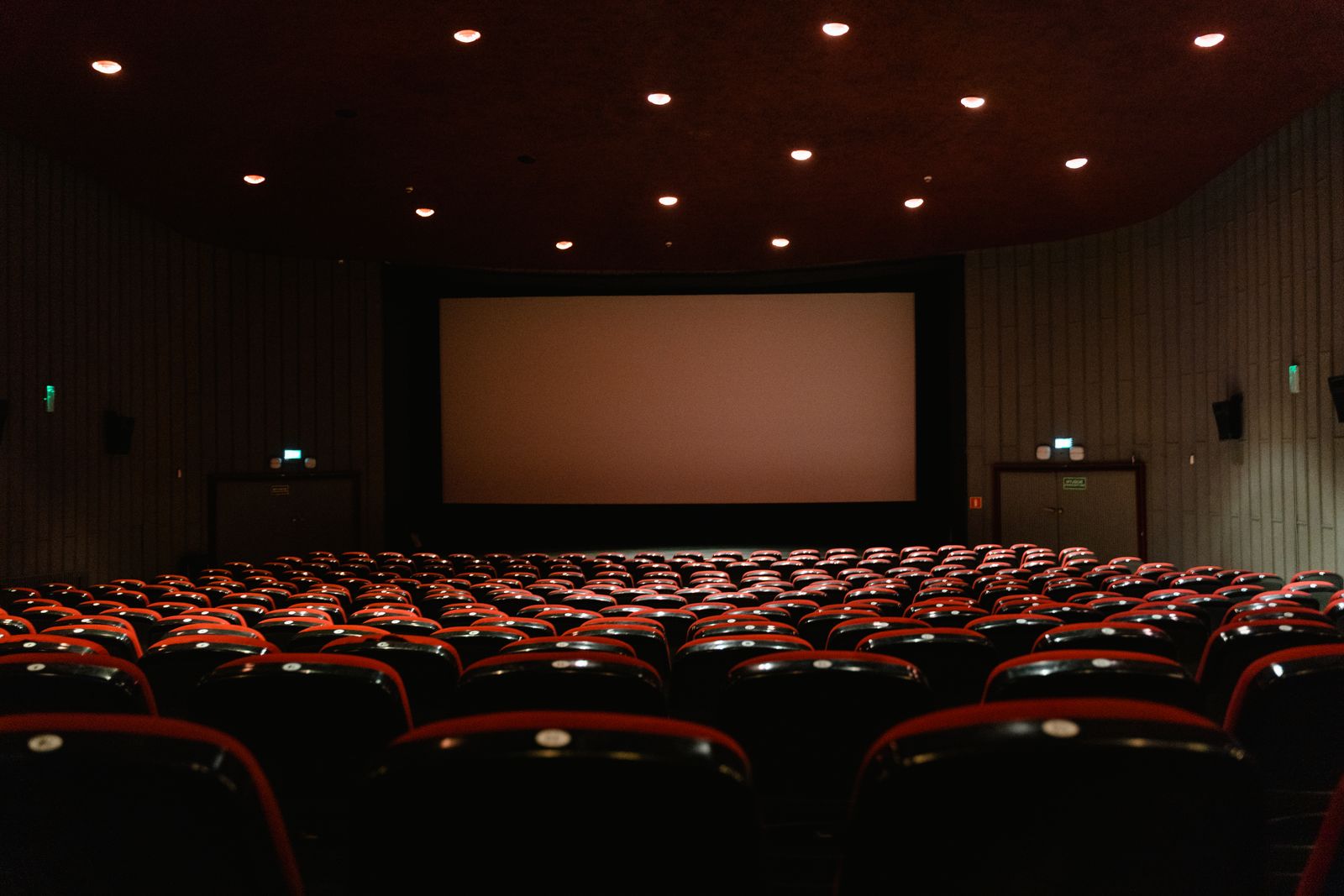
Sooner or later, every college and school with an auditorium has the same meeting. The projector has gone dim again, annual day is six weeks away, and someone asks what an LED wall would cost. This guide is for the principal, trustee or AV coordinator who has to take that answer to management.
The short version
- Size from the last row. For slides people must read, the last row should sit no further than about six times the height of the wall.
- Pitch from the first row. Indoor P2.5 when the front row sits 2.5 m or more from the wall, in typical and large halls alike. It is the coarsest indoor pitch we sell.
- Up to 600 nits is plenty. A hall needs a wall that works with the lights on, not an outdoor panel turned down.
- Let the stage decide the service side. Front-service against a solid back wall. Rear-service when there is a backstage passage.
- Budget. A 12 × 8 ft P2.5 wall is ₹6,25,000 + GST and a 16 × 9 ft wall is ₹9,60,000 + GST, controller and installation included.
Why are colleges replacing auditorium projectors?
An auditorium is almost never dark. Assembly happens with the doors open, guest lectures run with daylight around the curtains, and annual day brings stage lights that spill onto everything. A projector struggles in all three, because it does not make its own light. It throws light at a screen, and the screen reflects every other light in the hall along with it. Black turns grey, and the back rows squint.
An LED wall makes its own light, so the picture holds up with the house lights on. There is no lamp to replace, and a speaker who crosses the stage casts no shadow over their own slides. A projector still suits a lecture hall used a few hours a week with blackout curtains. Our comparison of LED walls, projectors and LCD video walls shows where each one wins.
How big should an auditorium LED wall be?
Start at the back of the hall, not on the stage. Measure from the stage wall to the last row, and to the back of the balcony if there is one. Then apply a long-standing AV rule of thumb: for slides people must read, the last row should be no further away than about six times the height of the picture. Films and dance performances can stretch that to about eight times.
| Last row from the wall | Wall | Built size | Indoor P2.5, controller included |
|---|---|---|---|
| Up to about 11.5 m | 12 × 6 ft | 3.84 × 1.92 m | ₹4,68,000 + GST |
| Up to about 15 m | 12 × 8 ft | 3.84 × 2.56 m | ₹6,25,000 + GST |
| Up to about 17 m | 16 × 9 ft | 5.12 × 2.88 m | ₹9,60,000 + GST |
| Up to about 19 m | 20 × 10 ft | 6.4 × 3.2 m | ₹12,97,500 + GST |
Distances are for reading slides, at six times the built height. Prices are installed, with the controller, excluding 18% GST. Updated 30 September 2026.
Then check the shape. Slides and most videos are 16:9, which a 16 × 9 ft wall fills edge to edge; a wider 20 × 10 ft wall leaves side bands for the college crest or a live camera of the speaker. Mount the bottom edge above the heads of people standing on stage, so the lectern never hides the last line of a slide, and make sure the balcony rail does not cut across the wall. The LED wall size calculator turns your measurements into cabinets and pixels.
Which pixel pitch does an auditorium need?
Pixel pitch is the gap between pixels, in millimetres, and the closest comfortable viewing distance in metres is roughly the pitch number. In an auditorium, the people closest to the wall sit in the front row, so that is the distance to measure. The chief guest on the dais sits closer, but faces the audience, not the wall.
Auditoriums: indoor P2.5, deep halls included
In a typical college or school hall, where the front row sits within about 4 m of the wall, indoor P2.5 is the answer. It is ₹5,450 per sq ft + GST, installed, and looks smooth from 2.5 m. Large halls with a deep stage, where even the front row sits well back, stay on indoor P2.5 too. It is the coarsest indoor pitch we sell, and from further back it only looks smoother.
Seminar rooms and smart classrooms: P1.8
In a seminar room, students sit within 2 m of the screen and read small text: code, equations, spreadsheets. That needs P1.8, at ₹7,400 per sq ft + GST. A 10 × 6 ft P1.8 wall is ₹5,33,000 + GST with the controller.
What not to buy: fine pitch for a big hall. P1.2 and P1.5, at ₹13,100 and ₹10,950 per sq ft + GST, are made for boardrooms and control rooms where people sit within 1.5 m. Nobody in an auditorium sits that close, so spend the money on size instead. The viewing distance calculator checks any pitch against your front row.
How bright should an auditorium wall be?
Our indoor walls reach up to 600 nits, and a hall rarely needs all of it: close to full when daylight comes in during morning events, well below for evening programmes under stage lights. The common mistake runs the other way. A wall at full power in a darkened hall glares at the front rows and turns faces on it into white patches on camera, so set brightness by time of day. Our guide to LED wall brightness has the numbers for every space.
Two more specifications matter. Indoor cabinets are rated IP43, which is right for a hall, so don't pay for outdoor weatherproofing. And ask for a 3,840 Hz refresh rate, so phone videos of the stage show a clean wall instead of rolling bands.
Auditorium
Lights on. Every slide still sharp.
A hall is used morning, afternoon and evening. The wall has to work in all three without anyone reaching for the curtains.
Front service or rear service behind the stage?
If the wall is fixed to the solid back wall of the stage, or set into a proscenium arch, there is nothing behind it. Choose front-service cabinets: modules come out from the stage side, and the backdrop and curtains stay untouched. If there is a backstage passage with at least 600 mm of clear space behind the wall, rear-service cabinets work well. Our guide to front-service and rear-service walls covers the trade-offs.
Plan power at the same time: a dedicated, earthed line with a stabiliser, run to the stage before the false ceiling goes up. The free site survey checks the wall, the power and the sightlines, and you see a 3D mockup of the wall on your stage before you pay.
What will the wall show, and who will run it?
Plan the content before the hardware. Most auditorium walls carry five kinds.
- Event branding and a welcome loop while the hall fills.
- Slides and videos from a laptop for guest lectures, seminars and placement talks.
- A live camera of the stage, so the back rows can see faces.
- Prize-winners’ photos, results and sponsor logos during the intervals.
- A scheduled loop of notices for assembly days.
The wall works like a very large monitor: a laptop or camera switcher plugs into the controller over HDMI. Scheduled content runs on PxlOS, our cloud CMS, from a phone or a browser, so the assembly loop is set once and left running. Name one person who owns the content, and we train them at handover.
What does an auditorium LED wall cost in Bengaluru?
| Space | Wall | Price with controller |
|---|---|---|
| Seminar hall or assembly area | 10 × 6 ft, indoor P2.5 | ₹3,94,000 + GST |
| Seminar room with close seats | 10 × 6 ft, indoor P1.8 | ₹5,33,000 + GST |
| Mid-size auditorium | 12 × 8 ft, indoor P2.5 | ₹6,25,000 + GST |
| Large auditorium | 16 × 9 ft, indoor P2.5 | ₹9,60,000 + GST |
| Campus gate notice board | 10 × 6 ft, outdoor P4 | ₹3,56,500 + GST, structure extra |
Installed by our own crew, with PxlOS, 5% spare modules and the 2-year pixel-to-pixel onsite warranty. Outdoor cabinets are IP65 at the front and IP54 at the rear.
Budget for 18% GST on top (see HSN codes and GST rates), and ask your auditor early about input credit. You get a formal GST quotation with pitch, size, controller and warranty in writing, ready for the management committee or the trust. Every other size is on the LED wall price page, and our pages for colleges and schools list typical walls space by space.
The 2-year pixel-to-pixel onsite warranty treats one dead pixel as a valid claim. We respond within 24 hours in Bengaluru, and visits to district cities such as Mysuru or Hubballi are scheduled within the week.
How does an auditorium project run?
- Survey. We measure the stage, the first and last rows and the balcony, check power, and send a 3D mockup of the wall in your hall.
- Quotation. A formal GST quotation for management approval.
- Build and test. The wall is assembled and burn-in tested at our Bengaluru facility, so a weak module shows up in the workshop, not on inauguration day.
- Install. Our own crew needs one to three working days on site, during the holidays or after classes.
- Handover. Your AV coordinator is trained on the inputs and on PxlOS.
Size the wall for the last row. Choose the pitch for the first.
Where to go next
An auditorium wall runs every assembly, seminar and annual day for years. Get the last row and the first row right, and it becomes part of the building. Two measurements and the LED wall configurator give you a real number for the next meeting.
Questions? Answers.
How big an LED wall does a college auditorium need?
Which pixel pitch should a school auditorium use?
Can a school rent an LED wall for annual day instead of buying one?
Can teachers and office staff change what the wall shows?
Can our institution claim GST input credit on the wall?
See it running. Then decide.
Send your wall size on WhatsApp for a same-day price, or see indoor and outdoor walls running at our Jalahalli East experience centre in Bengaluru.
Prices are estimates: installed, controller extra, plus 18% GST. See every price